
Revolutionizing 3D Printing in 2025: The Role of AI in Slicing, Design, and Quality Control

Artificial intelligence is reshaping 3D printing in ways that were unimaginable just a few years ago. In 2025, AI-powered tools are not only speeding up the printing process but also improving the quality and efficiency of additive manufacturing. From smarter slicing software to generative design and real-time failure detection, AI is becoming an essential part of the 3D printing workflow. Companies like Bambu Lab and Prusa are leading this transformation by integrating AI into their printers and software, making advanced 3D printing accessible to more users.
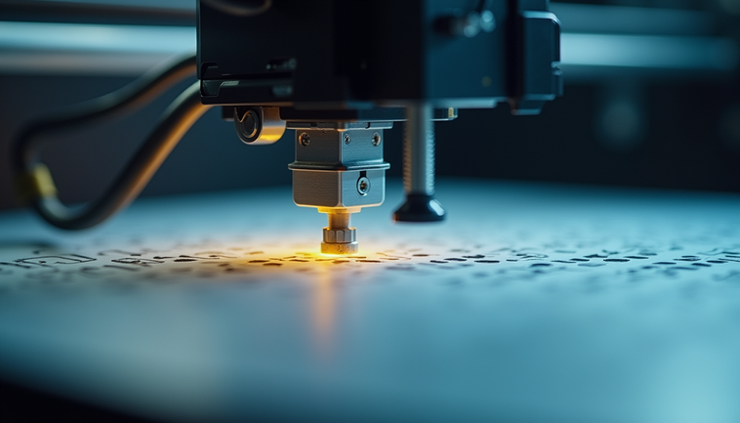
AI-Powered Slicing Software Enhances Print Efficiency
Slicing software converts 3D models into instructions that printers follow layer by layer. Traditionally, slicing was a manual or semi-automated process that required users to balance print speed, material use, and quality. Now, AI-powered slicing software analyzes the model and automatically adjusts settings to optimize these factors.
These AI tools use machine learning to predict the best layer height, infill density, and print speed based on the model’s geometry and material properties. This reduces print time and material waste while maintaining or improving surface finish and strength. For example, Bambu Lab’s AI slicing engine adapts in real time, adjusting parameters to prevent common issues like stringing or warping.
The benefits include:
Faster print times without sacrificing quality
Reduced material consumption and cost
Less trial and error for users, especially beginners
This shift means users spend less time tweaking settings and more time creating.
Generative Design Algorithms Create Optimized Geometries
Generative design uses AI algorithms to create complex, optimized shapes that traditional design methods cannot easily produce. These algorithms take input goals such as weight limits, strength requirements, and material constraints, then generate multiple design options that meet those criteria.
In 3D printing, generative design helps create lightweight parts with internal lattice structures or organic shapes that use less material but maintain strength. This is especially valuable in industries like aerospace, automotive, and medical devices where performance and weight are critical.
Prusa, known for its open-source 3D printers, has started integrating generative design tools that allow users to explore AI-generated models directly within their software ecosystem. This integration helps users:
Discover innovative designs that improve functionality
Reduce material use and printing time
Customize parts for specific applications easily
Generative design combined with additive manufacturing unlocks new possibilities for product development.

Machine Learning Enables Real-Time Print Failure Detection
Print failures like layer shifting, nozzle clogging, or warping can waste hours and materials. AI-powered machine learning models now monitor printers in real time using sensors and cameras. These models detect anomalies early and alert users or automatically adjust printer settings to fix issues.
For example, Bambu Lab’s printers use machine learning to analyze video feeds and temperature data during printing. If the system detects a potential failure, it pauses the print or modifies parameters to prevent defects. This reduces failed prints and improves overall reliability.
Key advantages include:
Early detection of print problems before they ruin the entire object
Reduced material waste and cost savings
Increased confidence for users running long or complex prints
This technology is especially useful for professionals and hobbyists who want consistent results without constant supervision.
AI-Assisted Support Structure Generation Simplifies Post-Processing
Support structures are necessary for printing overhangs and complex shapes but can be difficult to remove and add extra material cost. AI-assisted support generation tools analyze the model and automatically create minimal, easy-to-remove supports tailored to the geometry.
These AI systems consider factors like print orientation, overhang angles, and material properties to design supports that provide stability during printing but break away cleanly afterward. This reduces post-processing time and improves surface quality.
Prusa’s latest software updates include AI-driven support generation that helps users:
Save material by using fewer supports
Reduce cleanup time after printing
Achieve better surface finishes on complex parts
This feature makes 3D printing more user-friendly and efficient, especially for intricate designs.

How Bambu Lab and Prusa Are Leading AI Integration
Bambu Lab and Prusa are two companies at the forefront of combining AI with 3D printing technology. Bambu Lab focuses on integrating AI into hardware and software, offering printers with built-in machine learning for slicing, failure detection, and print optimization. Their approach reduces user intervention and improves print success rates.
Prusa, with its strong community and open-source roots, emphasizes AI tools that empower users to design and print smarter. Their generative design and support structure AI features are integrated into their popular PrusaSlicer software, making advanced AI capabilities accessible to hobbyists and professionals alike.
Both companies demonstrate how AI can improve every stage of the 3D printing process, from design to final print, making additive manufacturing more efficient, reliable, and creative.


Comments