
Revolutionizing Product Design with Multi-Material 3D Printing Innovations in 2025

3D printing technology has taken a significant leap forward in 2025. The ability to print with multiple materials simultaneously is transforming how makers, engineers, and enthusiasts approach product design, prototyping, and manufacturing. Modern 3D printers now handle flexible TPU, rigid PLA, and conductive filaments in a single print job, opening new doors for creativity and functionality.
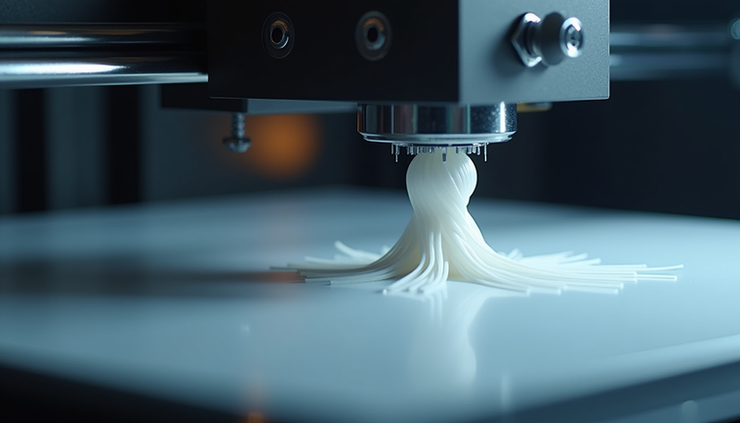
How Multi-Material 3D Printing Works in 2025
Multi-material 3D printing uses advanced Fused Deposition Modeling (FDM) systems equipped with multiple extruders or a single nozzle capable of switching between materials quickly. This technology allows printers to deposit different filaments layer by layer or even within the same layer. The most common materials combined today include:
Flexible TPU: Offers elasticity and impact resistance, ideal for wearable parts or grips.
Rigid PLA: Provides structural strength and ease of printing.
Conductive filaments: Enable embedded electronics and sensors directly within printed parts.
The integration of these materials in one print job means complex assemblies no longer require manual assembly or bonding of separate parts. This reduces production time and improves the durability and precision of prototypes and final products.
Impact on Product Design and Prototyping
Designers and engineers benefit from multi-material 3D printing by creating prototypes that closely mimic the final product’s look and feel. For example, a prototype of a handheld device can have a rigid PLA body with flexible TPU buttons and conductive traces embedded for testing circuits.
This capability helps in:
Testing ergonomics and functionality without waiting for multiple manufacturing steps.
Reducing iteration cycles by printing fully functional prototypes in one go.
Exploring new design possibilities such as soft-touch surfaces combined with hard structural elements.
One notable case is a startup that developed a wearable health monitor using multi-material printing. They printed the flexible strap, rigid housing, and conductive pathways in one print, cutting prototype development time by 50%.
Advances in Manufacturing with Multi-Material Printing
Manufacturers are adopting multi-material 3D printing to produce small batches of complex products that would be costly or impossible with traditional methods. This technology supports:
Customized products with varying material properties tailored to user needs.
Embedded electronics without additional assembly steps.
Lightweight structures by combining rigid and flexible materials strategically.
For instance, a company producing drone parts uses multi-material printing to create frames with rigid PLA for strength and TPU for vibration dampening. This approach improves drone durability and flight stability.

Challenges and Considerations
While multi-material 3D printing offers many benefits, it also presents challenges:
Material compatibility: Not all filaments bond well together, which can affect part strength.
Printer calibration: Precise tuning is required to handle different melting points and extrusion rates.
Cost: Multi-material printers and specialty filaments can be expensive compared to single-material setups.
Users should carefully select materials based on their application and test prototypes thoroughly to ensure performance meets expectations.
The Future of Multi-Material 3D Printing Technology
Looking ahead, 3D printing technology in 2025 is moving toward even more advanced capabilities:
Increased material variety including ceramics, bio-materials, and more conductive options.
Improved printer hardware with faster switching and higher resolution.
Software enhancements for better multi-material design and slicing tools.
These developments will further expand what makers and engineers can create, pushing the boundaries of product design and manufacturing.

Takeaway for Makers and Engineers
Multi-material 3D printing is no longer a niche capability but a practical tool for creating functional, complex parts with diverse material properties. Makers and engineers should explore this technology to:
Speed up prototyping with realistic, functional models.
Build products that combine strength, flexibility, and electronics in one print.
Experiment with new designs that were previously difficult or impossible.
As 3D printing technology in 2025 continues to evolve, embracing multi-material printing will unlock new creative and manufacturing possibilities.


Comments